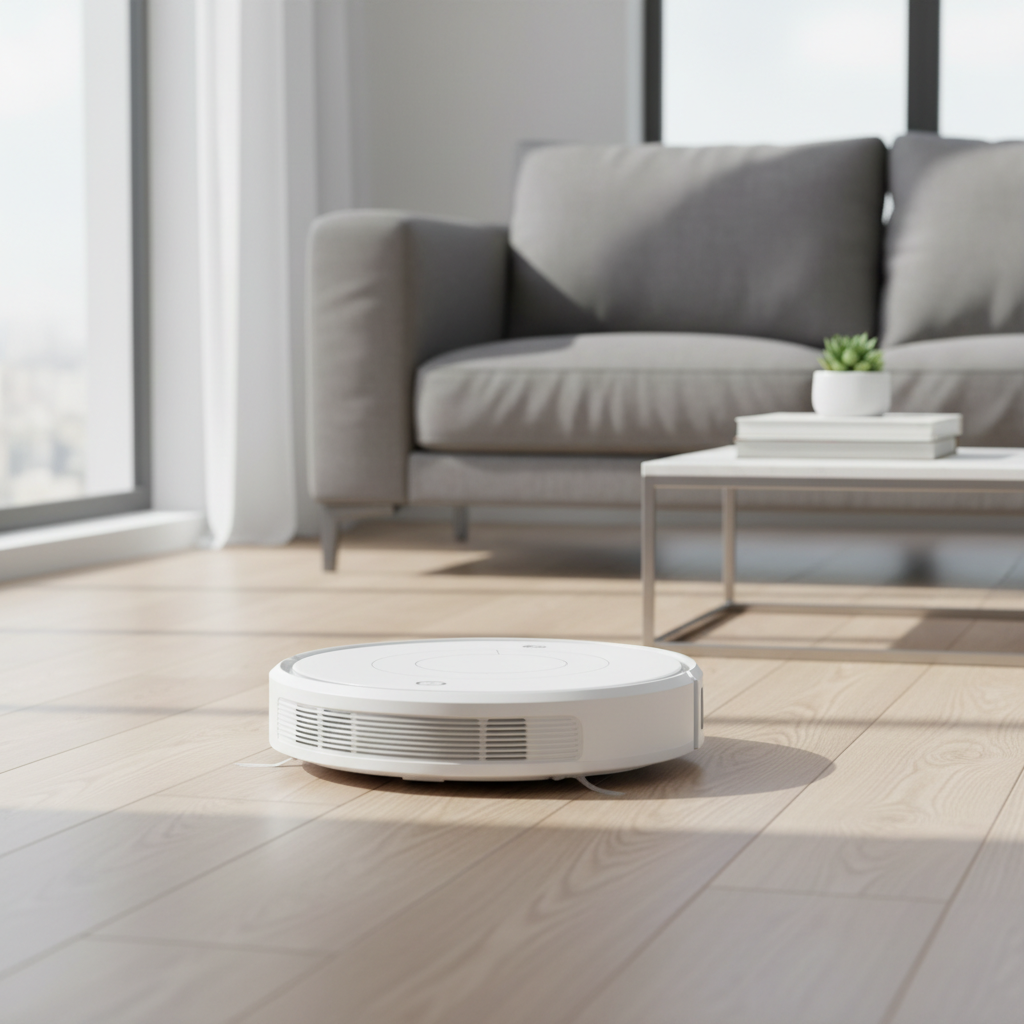
In a world increasingly connected, even our household appliances demand a constant internet link. For many, the idea of a robot vacuum mapping their home or transmitting data to the cloud raises significant privacy concerns. While smart robot vacuums offer advanced features, a growing number of consumers are seeking reliable, privacy-safe alternatives that perform their core function without relying on Wi-Fi connectivity. If you’re looking to simplify your cleaning routine without compromising your data security or dealing with complex app setups, then a non-Wi-Fi robot vacuum might be the perfect solution for your home.
What is a Robot Vacuum Cleaner (Without Wi-Fi)?
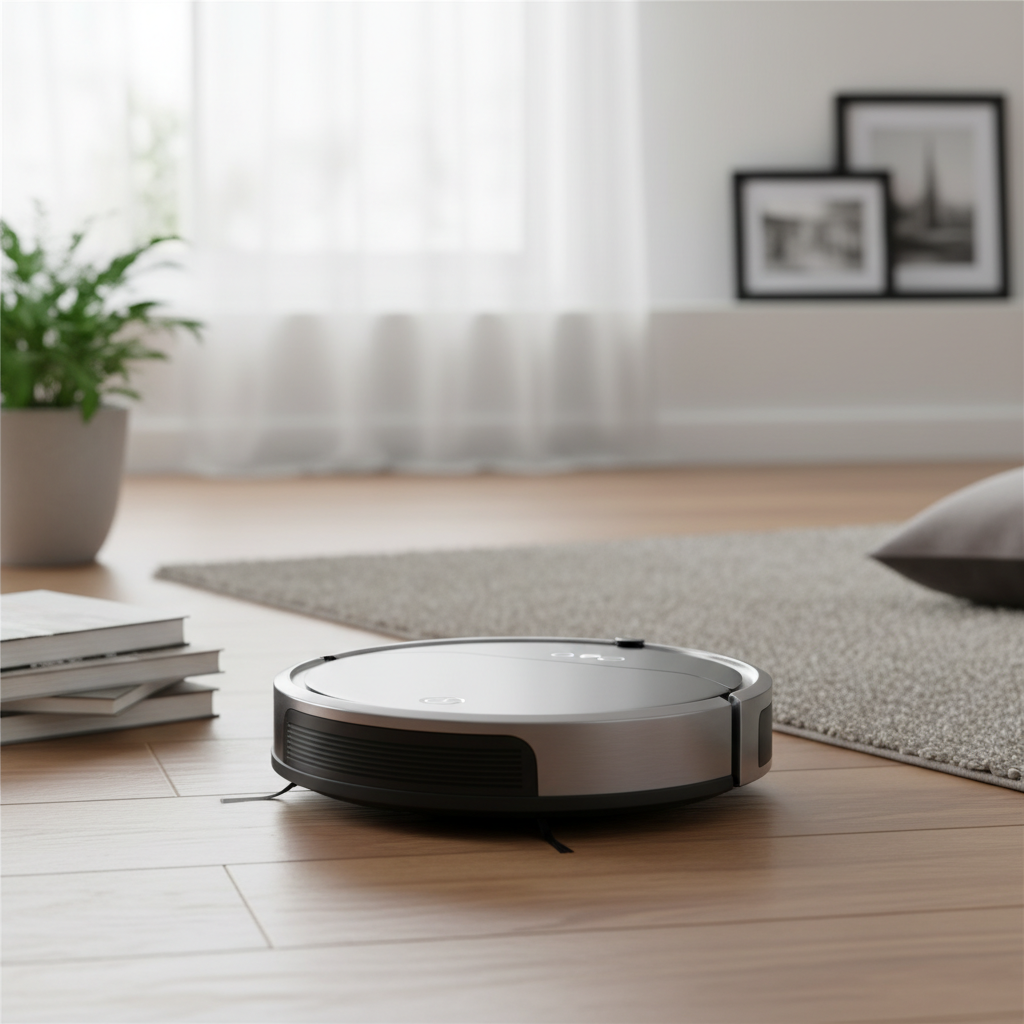
At its heart, a robot vacuum cleaner is designed to automate floor cleaning. A robot vacuum cleaner without Wi-Fi focuses solely on this primary task, operating independently of internet connectivity or smartphone applications. Unlike their “smart” counterparts that often rely on cloud-based processing for mapping and features, these offline models typically function through physical buttons on the device itself or a dedicated remote control. They offer a straightforward approach to cleaning, ideal for those who value simplicity and robust privacy.
These vacuums typically forgo advanced mapping and navigation systems that use cameras or LiDAR to build detailed floor plans, which are then often stored in the cloud. Instead, they utilize simpler navigation methods like “bump-and-run” patterns or gyroscopic navigation to cover cleaning areas effectively without creating or transmitting sensitive home layout data. This distinction is crucial for users who prioritize keeping their personal space truly private.
Benefits of Using a Robot Vacuum Without Wi-Fi
Choosing a robot vacuum that operates without Wi-Fi comes with several compelling advantages, especially for users who value simplicity and data security.
One of the most significant benefits is enhanced privacy and security. Robot vacuums with cameras or advanced mapping capabilities can generate detailed floor plans and even capture images of your home’s interior, which are then often stored on company servers. Opting for a non-Wi-Fi model eliminates these concerns, as there’s no internet connection for data transmission, minimizing the risk of your home’s layout or images falling into the wrong hands or being used for data analysis. This also removes the potential for hacking or unauthorized access to your device through an internet connection.
Secondly, these vacuums offer unparalleled simplicity and ease of use. There’s no complicated app setup, no Wi-Fi pairing frustrations, and no software updates to manage. Operation is typically as simple as pressing a “clean” button on the device or using a dedicated remote control. This makes them an excellent choice for individuals who prefer a straightforward user experience, including older adults who might not be comfortable with smartphone applications and complex smart home integrations.
Finally, non-Wi-Fi robot vacuums offer independence from internet connectivity. They will work reliably even during internet outages or in homes without a stable Wi-Fi network. This guarantees consistent cleaning performance without interruptions caused by network issues, ensuring your floors stay clean regardless of your internet status. Often, these models are also more affordable than their smart counterparts, offering excellent value for essential automated cleaning.
Important Features to Consider for Offline Robot Vacuums
When choosing a robot vacuum that operates without Wi-Fi, certain features become paramount for ensuring effective and hassle-free cleaning.
Control Methods are key. Since smartphone apps are out of the picture, look for models with intuitive physical buttons directly on the vacuum itself for basic start/stop functions, or a remote control that offers more comprehensive command over cleaning modes, direction, and scheduling. A remote allows for greater convenience without requiring any network connection.
Navigation Type is another critical aspect. Without advanced Wi-Fi-enabled mapping, many offline models rely on gyroscopic navigation or a simpler “bump-and-run” system. Gyroscopic navigation allows for more systematic cleaning patterns, such as zig-zag paths, ensuring better coverage without retaining detailed map data. While “bump-and-run” is less systematic, it’s effective for smaller, less complex spaces. Models that avoid cameras for navigation are often preferred for privacy.
Battery life determines how large an area the robot can clean on a single charge. Look for models offering 90-130 minutes of runtime or more, especially for larger homes. A reliable self-charging capability is also essential, allowing the robot to return to its base automatically when its battery is low, even without Wi-Fi.
Consider suction power, typically measured in Pascals (Pa). Higher Pa ratings (e.g., 2000Pa to 5000Pa) are better for picking up stubborn dirt, pet hair, and cleaning carpets. For fine dust and allergens, a good filter type, such as a HEPA filter, is beneficial. Lastly, basic cleaning modes like auto, spot, and edge cleaning, often accessible via remote, add versatility to your cleaning routine.
Comparing Price Segments for No-Wi-Fi Robot Vacuums
Robot vacuums without Wi-Fi generally fall into more accessible price points compared to their smart, connected counterparts. Understanding these segments can help align expectations with budget.
Budget-friendly (Typically under $200): This segment is dominated by basic “bump-and-run” models or those with simple gyroscopic navigation. You can expect reliable daily cleaning for hard floors and low-pile carpets. Features often include physical buttons, a remote control for basic commands (start, stop, cleaning modes), and decent battery life. They are excellent for small apartments or specific rooms, prioritizing straightforward functionality over advanced features. Brands like older Eufy RoboVacs (e.g., 11S) and some ILIFE models frequently appear here.
Mid-range (Typically $200-$400): In this category, you’ll find improved suction power, more efficient gyroscopic navigation, and enhanced battery life. Some models might offer slightly more sophisticated remote controls with basic scheduling functions. These vacuums are suitable for medium-sized homes with mixed floor types, offering a good balance of performance and simplicity. The Lubluelu SG60, for example, offers gyroscopic mapping and remote control in this range.
Premium (Typically above $400): While true “no Wi-Fi” robot vacuums are less common at the higher end, this segment might include models that offer robust offline operation after an initial, optional Wi-Fi setup. These might feature more powerful motors, larger dustbins, or advanced non-camera-based obstacle avoidance (like simple infrared sensors) that functions without internet. Some higher-end Shark Navigator models have been noted for strong offline capabilities, often including a self-empty base that still functions without Wi-Fi. However, be wary of models that require an app for core functionality, even if they claim “optional” Wi-Fi, as this defeats the privacy-first intent. For ultimate privacy, stick to models explicitly designed for offline, non-app control from the start.
Top Robot Vacuums Without Wi-Fi (Privacy Safe)
For those prioritizing privacy and simplicity, these robot vacuums deliver effective cleaning without the need for Wi-Fi or complex app interfaces.
1. Eufy RoboVac 11S / 11S MAX
|
Our Picks for the Best Robot vacuum cleaner in 2026
As an Amazon Associate I earn from qualifying purchases.
|
||
| Num | Product | Action |
|---|---|---|
| 1 | eufy Robot Vacuum 11S MAX, Super Thin, Powerful Suction, Quiet, Self-Charging Robotic Vacuum Cleaner, Cleans Hard Floors to Medium-Pile Carpets, Black |

|
| 2 | Tikom Robot Vacuum and Mop Combo, 5000Pa Robotic Vacuum Cleaner, 150 Min Max, App & Remote Control, Ideal for Hard Floor, Carpet, Pet Hair, Self-Charge(G8000 Max) |
|
| 3 | SHELIKI Robot Vacuum and Mop Combo, 3-in-1 Robotic Vacuums Cleaner with 70-Day Self-Emptying Base, LiDAR Navigation Smart Mapping & Strong 6000Pa Suction, for Pet Hair, Hard Floor, Carpet |
|
| 4 | Shark Matrix Clean | Robot Vacuum Cleaner with Powerful Suction for Pet Hair, Rugs, Carpets & Hard Floors | Self-Empty Base | 60-Day Capacity | Voice Control | LiDAR Navigation | Cool Grey | AV2511AE |
|
| 5 | ILIFE V2 Robot Vacuum Cleaner, Tangle-Free Suction, 120 Mins Runtime, Slim, Self-Charging Robotic Vacuum Cleaner, Ideal for Pet Hair and Hard Floors |
|
| 6 | Robot Vacuum and Mop Combo, 2 in 1 Robot Vacuum Cleaner with WiFi/App, Smart Robotic Vacuums with Strong Suction, Schedule, Self-Charging, Slim, Quiet, Ideal for Hard Floor, Pet Hair, Low Pile Carpet |
|
| 7 | Robot Vacuum and Mop, Mapping Robotic Vacuums Cleaner with LiDAR Navigation Smart & Strong Suction, WiFi/App/Alexa/Voice Control, Obstacle Avoidance, for Home, Wood/Hard Floors, Pet Hair -Gray |
|
| 8 | roborock Q7 M5+ Robot Vacuum and Mop, Upgraded from Q5 Max+, Up to 7-9 Weeks Self-Empty, 10000Pa Suction, Dual Anti-Tangle System for Pet Hair & Carpet, PreciSense LiDAR Navigation, App Control, Black |
|
| 9 | Tikom Robot Vacuum and Mop, 6000Pa Robotic Vacuum Cleaner with Self-Emptying Base, 90 Days Capacity, LiDAR Navigation, Home Mapping, Ideal for Pet Hair, Hard Floors, Carpet (L8000 Plus) |
|
| 10 | roborock Qrevo Series Robot Vacuum and Mop, 8000Pa Suction, Upgraded from Qrevo S, Anti-Tangle Brushes, Smart Obstacle Avoidance, Auto Mop Washing, All-in-One Dock, 200RPM Spinning Mops, Black(QV 35A) |
|
The Eufy RoboVac 11S and its enhanced version, the 11S MAX, are perennial favorites for entirely offline operation. These super-thin vacuums boast impressive suction power (up to 2000Pa for the 11S MAX) and use BoostIQ technology to automatically increase suction on tough messes. Controlled via an included remote, they offer various cleaning modes (auto, spot, edge) and provide up to 100 minutes of continuous runtime. Their “bump-and-run” navigation is simple yet effective for cleaning under furniture and around obstacles, making them ideal for straightforward, no-fuss floor care without any internet connectivity or data concerns.
2. iRobot Roomba 600 Series (e.g., Roomba 614)
Older models within the iRobot Roomba 600 series, such as the Roomba 614, are known for their physical button controls and ability to operate completely offline. While they offer more basic, adaptive navigation (reacting to obstacles), they are incredibly reliable for daily cleaning on various floor types. These models lack sophisticated mapping, further ensuring privacy. Their robust build and proven cleaning performance make them a solid choice for users seeking a durable, simple, and private cleaning solution.
3. Lubluelu SG60
The Lubluelu SG60 presents an appealing balance of privacy and systematic cleaning. It features gyroscopic mapping technology, allowing it to clean in efficient zig-zag patterns without relying on cameras or complex mapping data that could compromise privacy. Control is primarily through a remote, offering options for auto, spot, and edge cleaning, as well as direction control. With a run time of up to 130 minutes, it’s efficient for whole-home cleanups and will return to its charging station automatically, even without Wi-Fi.
4. ILIFE V5s Pro 2
The ILIFE V5s Pro 2 stands out for offering both vacuuming and mopping functions in a budget-friendly package that doesn’t require Wi-Fi. It’s controlled via remote, making it easy to switch between modes and initiate cleaning. This model uses basic navigation to clean hard floors and low-pile carpets effectively. It’s a great option for those seeking dual cleaning capabilities without the smart tech overhead.
5. Shark Navigator Robot Vacuum (Select Models)
Some Shark Navigator robot vacuum models, such as those with a self-empty base, offer strong offline capabilities. While some may feature optional Wi-Fi or voice control, their core cleaning functions, including SmartPath Navigation (using spot LiDAR) and automatic object avoidance, can operate independently without an internet connection after initial setup. They excel at pet hair pickup and often come with a self-emptying base that conveniently stores debris for up to 60 days, minimizing manual interaction. Be sure to verify specific models for their non-Wi-Fi functionality before purchase.
Bảng So Sánh Chi Tiết Các Mẫu Robot Vacuum Cleaner
| Tiêu chí | Eufy RoboVac 11S MAX | iRobot Roomba 614 | Lubluelu SG60 | ILIFE V5s Pro 2 | Shark Navigator Robot Vacuum (Select Offline Models) |
|---|---|---|---|---|---|
| Giá (ước tính) | $150 – $250 | $200 – $350 | $180 – $280 | $150 – $250 | $300 – $500 |
| Loại sàn | Hardwood, Tile, Low-Pile Carpet | Hardwood, Tile, Low-Pile Carpet | Hardwood, Tile, Low-Pile Carpet | Hardwood, Tile, Low-Pile Carpet | Hardwood, Tile, All Carpet Types |
| Diện tích | Nhỏ đến vừa | Nhỏ đến vừa | Nhỏ đến vừa | Nhỏ đến vừa | Vừa đến lớn |
| Thời lượng pin | Lên đến 100 phút | Lên đến 90 phút | Lên đến 130 phút | Lên đến 120 phút | Lên đến 90-120 phút |
| Hệ thống điều hướng | Bump-and-Run | Adaptive Navigation | Gyroscopic Mapping | Basic Navigation | SmartPath Navigation (Spot LiDAR) |
| Lực hút | 2000Pa | Cân bằng (không công bố cụ thể) | 2000Pa+ | 1000Pa (vaccum), 500Pa (mop) | Mạnh (không công bố cụ thể) |
| Bộ lọc | Bộ lọc tiêu chuẩn | Bộ lọc tiêu chuẩn | Bộ lọc hiệu suất cao | Bộ lọc tiêu chuẩn | Bộ lọc hiệu suất cao |
| Tính năng đặc biệt | Siêu mỏng, BoostIQ | Phát hiện bụi bẩn, Sạc tự động | Cảm biến chống va chạm/rơi, Sạc tự động | Hút bụi và lau nhà, Sạc tự động | Tự động làm rỗng thùng rác (60 ngày), Chống rối tóc |
| Ưu điểm | Hoàn toàn offline, dễ sử dụng, yên tĩnh, giá cả phải chăng | Đơn giản, đáng tin cậy, thương hiệu uy tín | Điều hướng có hệ thống hơn, tùy chọn điều khiển linh hoạt | Chức năng 2 trong 1 (hút & lau), giá rẻ | Điều hướng chính xác, làm rỗng thùng rác tự động, lực hút mạnh |
| Nhược điểm | Điều hướng ít hiệu quả trên diện tích lớn | Ít tính năng, điều hướng cơ bản | Vẫn có tùy chọn kết nối Wi-Fi (nếu muốn) | Điều hướng cơ bản, lực hút/lau có thể yếu hơn | Một số mẫu có thể yêu cầu thiết lập Wi-Fi ban đầu, giá cao hơn |
Hướng Dẫn Mua Robot Vacuum Cleaner
Purchasing the ideal robot vacuum cleaner without Wi-Fi involves prioritizing specific factors to ensure it meets your privacy needs and cleaning expectations.
First, identify your specific cleaning needs. Consider your floor types (hardwood, tile, carpet), the size of your home, and whether you have pets that shed a lot of hair. For instance, a basic bump-and-run model might suffice for small, open spaces with hard floors, while a gyroscopic model would be better for larger areas requiring more systematic coverage.
Next, prioritize the control method that suits you best. If absolute simplicity is key, models with physical start/stop buttons are ideal. For more functionality without an app, look for vacuums that come with a dedicated remote control, allowing you to select cleaning modes, set basic schedules, or steer the device manually.
Understand the navigation limitations of offline models. Without Wi-Fi-enabled smart mapping, these vacuums won’t offer virtual no-go zones or targeted room cleaning. They rely on their physical sensors and programmed patterns to navigate. Ensure the model you choose has effective cliff sensors to prevent falls and obstacle avoidance to prevent getting stuck.
Set a realistic budget, as this will narrow down your options significantly. While non-Wi-Fi models are generally more affordable, there’s a range of prices that correspond to features like suction power, battery life, and self-emptying capabilities.
Finally, read reviews from other users, specifically looking for comments on offline performance and ease of use without an app. This can provide valuable real-world insights into how well the vacuum functions in practice, free from internet dependencies. Purchasing from reputable retailers also ensures access to customer support and warranty services if needed.
“For ultimate peace of mind, choosing a robot vacuum that operates entirely offline is the clearest path to safeguarding your home’s digital privacy. It proves that effective cleaning doesn’t always require constant connectivity.” – Admin, ReviewEvoli.
Conclusion
Choosing a robot vacuum cleaner that operates without Wi-Fi is a smart decision for anyone prioritizing privacy, simplicity, and reliable cleaning free from internet dependencies. While these models might forgo some of the advanced mapping and app-controlled features of their smart counterparts, they excel at their core mission: keeping your floors clean with minimal fuss. From the straightforward operation of the Eufy RoboVac 11S to the systematic navigation of the Lubluelu SG60, there are excellent options available that offer robust performance without sending your home’s data to the cloud. By focusing on essential features like control methods, navigation type, and battery life, you can find a privacy-safe robot vacuum that perfectly fits your lifestyle and cleaning needs. Ready to reclaim your privacy while enjoying spotless floors?
Câu Hỏi Thường Gặp
Do all robot vacuums require Wi-Fi to function?
No, not all robot vacuums require Wi-Fi. Many models, especially older or budget-friendly options, are designed to operate entirely offline using physical buttons or remote controls, making them ideal for users concerned about privacy or without internet access.
Can I schedule a non-Wi-Fi robot vacuum to clean automatically?
Yes, some robot vacuums without Wi-Fi connectivity still offer basic scheduling features. This is typically done through the included remote control, where you can set specific times for the vacuum to start cleaning without needing an app or internet connection.
What features do I lose by choosing a robot vacuum without Wi-Fi?
By choosing a non-Wi-Fi robot vacuum, you generally lose access to advanced “smart” features such as real-time mapping, virtual no-go zones, voice control via third-party assistants, and app-based cleaning customization or remote monitoring. The focus shifts to simpler, more direct functionality.
Are robot vacuums without Wi-Fi less efficient at cleaning?
Not necessarily. While they may use simpler navigation (like gyroscopic or bump-and-run instead of camera/LIDAR mapping), many non-Wi-Fi models offer excellent suction power and can effectively clean various floor types. Their efficiency depends more on their design and motor rather than connectivity.
How do non-Wi-Fi robot vacuums navigate my home?
Non-Wi-Fi robot vacuums typically use simpler navigation systems, such as gyroscopic sensors for systematic zig-zag patterns or infrared/collision sensors for “bump-and-run” navigation. These methods allow them to cover cleaning areas without creating or storing detailed maps of your home.