Stepping into 2026, the robot vacuum market offers an astonishing array of devices designed to liberate you from daily cleaning chores. As these intelligent assistants evolve, two brands consistently lead the charge: Roborock and Roomba. Both have carved out formidable reputations, but they cater to slightly different philosophies of home cleaning. Are you seeking cutting-edge innovation and a comprehensive clean, or proven reliability with intuitive operation? This comparison will delve into their strengths, technologies, and standout models, helping you decide which brand best suits your home and lifestyle.
What is a Robot Vacuum Cleaner?
A robot vacuum cleaner is an autonomous device designed to navigate your home and clean floors without manual intervention. These compact machines utilize a combination of sensors, brushes, and suction to pick up dust, dirt, and debris. The concept originated in the early 1990s, with iRobot’s Roomba being a pioneering force that brought these devices into mainstream homes. Initially, they were simple bump-and-go cleaners, but over the years, they have evolved into sophisticated smart home appliances with advanced navigation, powerful suction, and even integrated mopping capabilities. Today’s robot vacuums can detect floor types, avoid obstacles, empty their own bins, and be controlled remotely via smartphone apps or voice commands.
Modern robot vacuums are broadly categorized into vacuum-only models, those that offer both vacuuming and dry mopping, and advanced hybrid units that provide simultaneous vacuuming and wet mopping, often with self-cleaning and auto-refilling docks.
Benefits of Using a Robot Vacuum Cleaner
The advantages of integrating a robot vacuum into your home are manifold, transforming daily cleaning from a chore into a seamless background process. The primary benefit is the significant saving of time and effort. Imagine returning to a consistently clean home without lifting a finger; these devices handle the routine maintenance, freeing you for other activities.
Their automatic and continuous cleaning capabilities ensure that dust and debris are kept at bay daily, preventing buildup. This is particularly beneficial for homes with pets, as they can tackle shedding fur before it becomes pervasive. Robot vacuums are also versatile, suitable for various floor types—from hardwood and tile to rugs and low-pile carpets. Advanced models can even adapt their cleaning strategy based on the surface. Furthermore, by regularly removing allergens and dust, robot vacuums contribute to improving indoor air quality, creating a healthier living environment for everyone.
Key Features to Consider When Choosing a Robot Vacuum Cleaner
Selecting the perfect robot vacuum requires careful consideration of several factors tailored to your specific needs. Each feature contributes to the device’s overall efficiency, convenience, and suitability for your home.
- Floor Type Compatibility: Your home’s flooring dictates the type of robot vacuum you need. Some models excel on hard floors (wood, tile, laminate), while others are engineered for deep cleaning carpets and rugs. Many modern hybrids offer excellent performance on both, often automatically adjusting suction or lifting mop pads when transitioning between surfaces.
- Home Size: The battery life and navigation system should match your home’s dimensions. Smaller apartments might be fine with basic models, but larger homes require longer runtimes and efficient mapping technologies to cover extensive areas without needing frequent recharges.
- Battery Life: Measured in minutes, this indicates how long the robot can clean on a single charge. For larger homes, look for models with “recharge and resume” functionality, allowing the robot to return to its dock, recharge, and then continue cleaning from where it left off.
- Navigation System: This is crucial for efficient and thorough cleaning.
- LIDAR (Laser Distance Sensor): Often found in higher-end models, LIDAR creates precise maps of your home, enabling systematic cleaning paths and effective obstacle avoidance, even in the dark.
- Camera-Based (vSLAM): Relies on a camera to build maps and identify surroundings. While effective, it can sometimes struggle in low-light conditions.
- Bump Sensors: Basic and less efficient, these robots navigate by making contact with obstacles.
Advanced AI navigation in 2026 models allows robots to distinguish between dirt, furniture, and cables, adapting in real time to your home’s unique layout.
- Connectivity: Wi-Fi connectivity allows control via smartphone apps, offering features like scheduling, zone cleaning, no-go zones, and cleaning history. Many also integrate with smart home ecosystems for voice control via virtual assistants.
- Suction Power: Measured in Pascals (Pa), higher suction power is generally better for deep cleaning carpets and picking up heavier debris and pet hair. High-end 2026 models boast suction powers upwards of 20,000 Pa, with some reaching 35,000 Pa.
- Filtration System: A high-efficiency particulate air (HEPA) filter is essential for allergy sufferers, trapping fine dust, pet dander, and allergens, thus improving air quality.
- Special Features:
- Self-Emptying Dock: Automatically transfers collected debris from the robot’s dustbin to a larger bag in the dock, reducing manual emptying to weeks or even months.
- Auto-Mop Washing/Drying: For hybrid models, the dock cleans and dries mop pads, ensuring hygiene and preventing mildew. Some even use hot water for better sanitization.
- Virtual Walls/No-Go Zones: Allows you to digitally block off areas where you don’t want the robot to clean or enter.
- Zone Cleaning: Enables you to direct the robot to clean specific rooms or areas as needed.
- Obstacle Avoidance: Advanced AI and sensors help robots identify and maneuver around common household items like shoes, cables, and pet waste, preventing them from getting stuck.
- Low-Profile Design: Slimmer robots can access hard-to-reach areas under furniture, ensuring a more comprehensive clean.
Comparing Roborock and Roomba: Which Brand is Best in 2026?
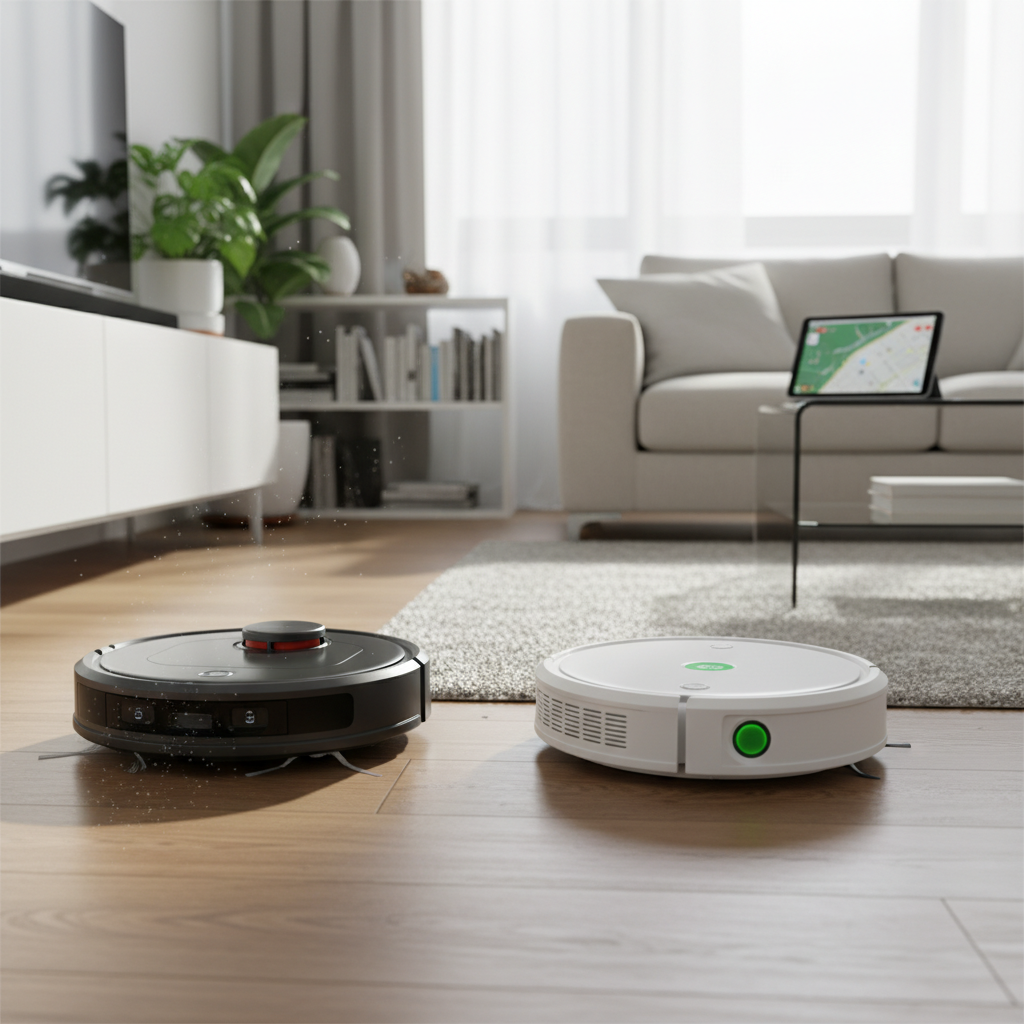
When it comes to the top tier of robot vacuum cleaners in 2026, Roborock and Roomba consistently stand out. Both brands offer compelling features, but their core philosophies and strengths differ significantly, making the “best” choice highly dependent on individual needs and priorities.
Roborock has emerged as a tech-forward innovator, often praised for its cutting-edge automation, advanced navigation, and integrated vacuum and mop systems. Their robots typically offer highly detailed mapping and a wide array of smart features through their intuitive app. Roborock generally appeals to users who prioritize sophisticated technology, a comprehensive two-in-one cleaning solution, and value for money, especially in their mid-range to premium offerings. Recent models focus on superior mopping performance, with features like sonic scrubbing, auto-lifting mop pads, and self-washing/drying docks that use hot water for enhanced hygiene. Roborock is also pushing boundaries with concepts like the Saros Rover, a stair-climbing robot vacuum with robotic legs, though this is still in development.
Roomba (iRobot), a household name synonymous with robot vacuums, emphasizes reliability, ease of use, and robust vacuuming performance. Their models are often lauded for their exceptional deep-cleaning capabilities, particularly on carpets, and their ability to handle pet hair effectively. Roomba’s navigation systems, such as vSLAM, focus on methodical cleaning and smart obstacle detection, making them dependable for everyday use. While historically more focused on vacuuming, Roomba has also introduced hybrid models with mopping functionalities, such as the Roomba Combo series. They are generally favored by users who seek straightforward, reliable cleaning with minimal setup and a strong focus on core vacuuming performance.
Key Differentiators in 2026:
- Mopping Capabilities: Roborock generally leads in integrated vacuuming and wet mopping, offering advanced features like sonic mops, auto-lifting pads, and sophisticated self-cleaning docks with hot water. Roomba has integrated mopping into its “Combo” series, but Roborock often provides a more advanced and versatile mopping experience.
- Navigation and Obstacle Avoidance: Both brands employ advanced navigation. Roborock often utilizes LIDAR for precise mapping and real-time obstacle avoidance, leading to efficient and systematic cleaning paths. Roomba’s camera-based vSLAM systems are also highly capable, with AI-powered obstacle avoidance that excels at identifying and circumnavigating common household hazards. Roborock’s newer models also feature extendable side brushes and mop pads for better edge cleaning.
- Suction Power: While both offer strong suction, Roborock’s premium models in 2026 are pushing the boundaries with extremely high Pascal ratings (e.g., 35,000 Pa in some new Saros models), offering exceptional power for deep cleaning. Roomba models like the S9 also provide very powerful suction, particularly effective on carpets.
- App Features and Automation: Roborock’s app is often cited for its extensive customization options, detailed mapping, and advanced features. Roomba’s app is user-friendly and offers robust controls, schedules, and smart home integrations.
- Price and Value: Roborock often provides a strong feature set for its price point, with competitive offerings across budget, mid-range, and premium segments. Roomba, while a premium brand, can sometimes have higher initial costs, though sales and promotions are frequent.
|
Our Picks for the Best Robot vacuum cleaner in 2026
As an Amazon Associate I earn from qualifying purchases.
|
||
| Num | Product | Action |
|---|---|---|
| 1 | roborock Q7 M5+ Robot Vacuum and Mop, Upgraded from Q5 Max+, Up to 7-9 Weeks Self-Empty, 10000Pa Suction, Dual Anti-Tangle System for Pet Hair & Carpet, PreciSense LiDAR Navigation, App Control, Black |

|
| 2 | SHELIKI Robot Vacuum and Mop Combo, 3-in-1 Robotic Vacuums Cleaner with 70-Day Self-Emptying Base, LiDAR Navigation Smart Mapping & Strong 6000Pa Suction, for Pet Hair, Hard Floor, Carpet |
|
| 3 | roborock Qrevo Series Robot Vacuum and Mop, 8000Pa Suction, Upgraded from Qrevo S, Anti-Tangle Brushes, Smart Obstacle Avoidance, Auto Mop Washing, All-in-One Dock, 200RPM Spinning Mops, Black(QV 35A) |
|
| 4 | Robot Vacuum and Mop Combo, 2 in 1 Robot Vacuum Cleaner with WiFi/App, Smart Robotic Vacuums with Strong Suction, Schedule, Self-Charging, Slim, Quiet, Ideal for Hard Floor, Pet Hair, Low Pile Carpet |
|
| 5 | Tikom Robot Vacuum and Mop Combo, 5000Pa Robotic Vacuum Cleaner, 150 Min Max, App & Remote Control, Ideal for Hard Floor, Carpet, Pet Hair, Self-Charge(G8000 Max) |
|
| 6 | eufy Robot Vacuum 11S MAX, Super Thin, Powerful Suction, Quiet, Self-Charging Robotic Vacuum Cleaner, Cleans Hard Floors to Medium-Pile Carpets, Black |
|
| 7 | Tikom Robot Vacuum and Mop, 6000Pa Robotic Vacuum Cleaner with Self-Emptying Base, 90 Days Capacity, LiDAR Navigation, Home Mapping, Ideal for Pet Hair, Hard Floors, Carpet (L8000 Plus) |
|
| 8 | Robot Vacuum and Mop, Mapping Robotic Vacuums Cleaner with LiDAR Navigation Smart & Strong Suction, WiFi/App/Alexa/Voice Control, Obstacle Avoidance, for Home, Wood/Hard Floors, Pet Hair -Gray |
|
| 9 | Shark Matrix Clean | Robot Vacuum Cleaner with Powerful Suction for Pet Hair, Rugs, Carpets & Hard Floors | Self-Empty Base | 60-Day Capacity | Voice Control | LiDAR Navigation | Cool Grey | AV2511AE |
|
| 10 | ILIFE V2 Robot Vacuum Cleaner, Tangle-Free Suction, 120 Mins Runtime, Slim, Self-Charging Robotic Vacuum Cleaner, Ideal for Pet Hair and Hard Floors |
|
Top Robot Vacuum Cleaners to Consider in 2026
Both Roborock and Roomba have impressive lineups in 2026, each with models catering to different needs. Here’s a look at some of their top offerings and what makes them stand out:
Roborock Top Picks:
- Roborock Saros 10R: Often considered one of the best overall robot vacuum/mop combos, especially for hard floors. It features excellent obstacle avoidance, powerful suction (around 22,000 Pa), and impressive mopping that lifts dried stains. Its slim design allows it to navigate under low furniture, and the dock handles most maintenance, including heated water for mop pad sanitization. Its main limitation might be pet hair pickup on carpets.
- Roborock Qrevo CurvX: This ultra-slim powerhouse offers exceptional suction (up to 22,000 Pa) and a unique DuoDivide main brush system for tangle-free hair management. Its Adaptive Lift Chassis technology allows it to traverse thresholds up to 40mm, and Reactive AI with cameras enables recognition of 108 different object types. The Multifunctional Dock 3.0 Thermo+ provides comprehensive self-maintenance with hot water mop washing.
- Roborock Saros 20 Sonic: This model showcases Roborock’s commitment to mopping innovation, featuring a vibrating mopping pad that extends to clean edges with zero millimeter precision. With 35,000 Pa suction, it promises vigorous cleaning power and flawless navigation.
Roomba Top Picks:
- iRobot Roomba j9+: A highly-rated model known for its strong suction, advanced obstacle avoidance technology, and self-emptying functionality. The j9+ excels at learning your home’s layout for automated cleaning customization and offers a feature-rich app. Its focus is on robust vacuuming performance and ease of use.
- iRobot Roomba Combo k1 EVO (Projected): Anticipated as a major leap for Roomba in 2026, this model is expected to feature AI DirtSense Technology to identify debris types and apply specific cleaning modes. It will likely include a fully retractable mopping pad for carpets and a robotic corner-cleaning arm for unparalleled edge and corner precision, addressing a traditional weakness of round robots.
- iRobot Roomba S9: While an older flagship, the S9 (and S9+ with its self-emptying base) still offers the most powerful suction in iRobot’s lineup, excelling on both bare floors and carpeting, particularly with pet hair due to its twin rubber brushrolls. Its camera-based vSLAM navigation is effective but may struggle in low light.
Detailed Comparison Table: Roborock vs. Roomba (Representative Models for 2026)
| Criteria | Roborock Saros 10R | Roomba j9+ | Roborock Qrevo CurvX |
|---|---|---|---|
| Price (Est.) | Premium ($1,500+) | Premium ($1,000+) | Premium ($800-$1,000) |
| Floor Type | Multi-surface (Excels on hard floors) | Multi-surface (Excels on carpets) | Multi-surface (Excels on hard floors/corners) |
| Home Size | Large homes | Large homes | Large homes |
| Battery Life | ~180-240 minutes | ~120-150 minutes | ~220 minutes |
| Navigation | StarSight 2.0, Camera/LIDAR | vSLAM (Camera-based) | Reactive AI with Camera, RetractSense LiDAR |
| Suction Power | 22,000 Pa | Strong, unspecified Pa (high) | 22,000 Pa |
| Filter | Standard (No HEPA explicitly mentioned) | High-Efficiency | High-Efficiency |
| Special Features | Heated mop wash, auto-refill, slim design, obstacle avoidance, extendable mop. | Self-emptying, obstacle avoidance, precise mapping, pet waste avoidance. | Ultra-slim (7.98cm), DuoDivide brush, AdaptiLift Chassis, hot water mop wash, edge cleaning. |
| Pros | Superior mopping, excellent hard floor cleaning, advanced obstacle avoidance, comprehensive dock. | Exceptional carpet cleaning, reliable obstacle detection, robust app, strong for pet hair. | Ultra-slim design, superior edge cleaning, strong suction, advanced threshold climbing. |
| Cons | Pet hair pickup on carpet could be better, premium price. | Less advanced mopping than Roborock, potentially higher cost, camera-based navigation can struggle in dark. | Older obstacle avoidance system in some Curv variants, slightly lower suction than Saros. |
How to Buy the Right Robot Vacuum Cleaner
Purchasing a robot vacuum can be a significant investment, so it’s essential to make an informed decision. Here’s a guide to help you navigate the process:
- Identify Your Needs: Start by assessing your home. What type of floors do you have? How large is your space? Do you have pets, allergies, or low-clearance furniture? What is your budget? Answering these questions will narrow down your options.
- Research Features and Specifications: Dive into the technical details. Compare suction power, battery life, navigation technology (LIDAR vs. camera), and special features like mopping, self-emptying, and obstacle avoidance. Understand what each feature offers and if it aligns with your needs.
- Read Reviews and Comparisons: Consult reputable tech review sites (like those used for this article), watch comparison videos, and read user testimonials. Pay attention to feedback on real-world performance, durability, and customer service. Look for insights from long-term users.
- Shop from Reputable Retailers: Purchase from authorized dealers, major electronics stores, or well-known e-commerce platforms. This ensures you receive genuine products, warranty coverage, and reliable customer support.
- Check the Product Thoroughly: Upon receipt, inspect the packaging and the robot itself for any damage. Familiarize yourself with the setup process and app functionalities. Ensure all advertised features are present and working as expected before fully committing.
Conclusion
In the dynamic world of robot vacuum cleaners in 2026, both Roborock and Roomba stand as titans, each bringing distinct strengths to the table. Roborock continues to impress with its blend of innovative mopping technologies, precise navigation, and high suction power, appealing to those who desire a comprehensive, cutting-edge cleaning solution. Roomba maintains its reputation for robust vacuuming, user-friendliness, and unwavering reliability, making it a solid choice for those prioritizing hassle-free, deep cleaning, especially on carpets.
Ultimately, the choice between Roborock and Roomba hinges on your personal priorities. Do you value advanced mopping and smart home integration more, or straightforward, powerful vacuuming? The continuous advancements from both brands mean that no matter your preference, a highly capable robot vacuum is available to simplify your cleaning routine. Which brand’s vision of a cleaner home resonates most with you?
Frequently Asked Questions
Which robot vacuum brand is better for pet hair?
Both Roborock and Roomba offer excellent solutions for pet hair. Roomba, with its dual rubber brushrolls and Dirt Detect technology, has historically excelled in picking up embedded pet hair from carpets. However, newer Roborock models like the Qrevo CurvX, with their DuoDivide brush systems and high suction power, are highly effective at preventing tangles and cleaning pet hair from various surfaces.
Can robot vacuums effectively clean stairs?
Traditionally, most robot vacuums cannot climb stairs. However, innovation is on the horizon. Roborock has unveiled the Saros Rover concept at CES 2026, featuring robotic legs designed to independently raise and lower the robot, allowing it to climb and clean stairs. While not yet widely available, this technology suggests a future where stair-climbing robot vacuums could become a reality.
Are Roborock and Roomba robot vacuums good for hard floors and carpets?
Yes, both brands offer models that perform well on hard floors and carpets. Roborock’s hybrid vacuum-mop models often excel on hard floors with advanced mopping features and good suction. Roomba models, particularly those with powerful brushroll systems, are renowned for their deep cleaning capabilities on carpets. Many premium models from both brands automatically detect floor types and adjust their cleaning methods accordingly, including lifting mop pads over carpets.
How often do I need to empty a robot vacuum’s dustbin?
For models without a self-emptying dock, you typically need to empty the onboard dustbin after almost every cleaning session, especially if you have pets or a larger home. With self-emptying docks, the frequency dramatically decreases, allowing you to go weeks or even months (up to 60 days in some cases) without manually emptying the main bin, as the robot automatically transfers debris to a larger bag in the dock.
What is the difference between LIDAR and camera-based navigation in robot vacuums?
LIDAR (Laser Distance Sensor) navigation uses lasers to create precise 3D maps of your home, enabling systematic cleaning paths and efficient movement even in complete darkness. Camera-based navigation (vSLAM) uses a camera to map and navigate, which can be effective but may be less precise in low-light conditions and typically builds a 2D map. Many modern robots combine these technologies with AI for enhanced obstacle avoidance and mapping accuracy.