Navigating the world of robot vacuums can feel like decoding a complex puzzle, especially when confronted with technical specifications like “Pa ratings.” These numbers, often prominently displayed, are meant to indicate a robot vacuum’s suction power, yet they rarely tell the full story. Understanding what Pascals truly mean for your robot vacuum and, more importantly, how they translate into actual cleaning performance is crucial for making an informed decision. Let’s demystify these ratings and help you find the perfect balance of power and efficiency for a spotless home.
What is Pa in Robot Vacuum Cleaners?
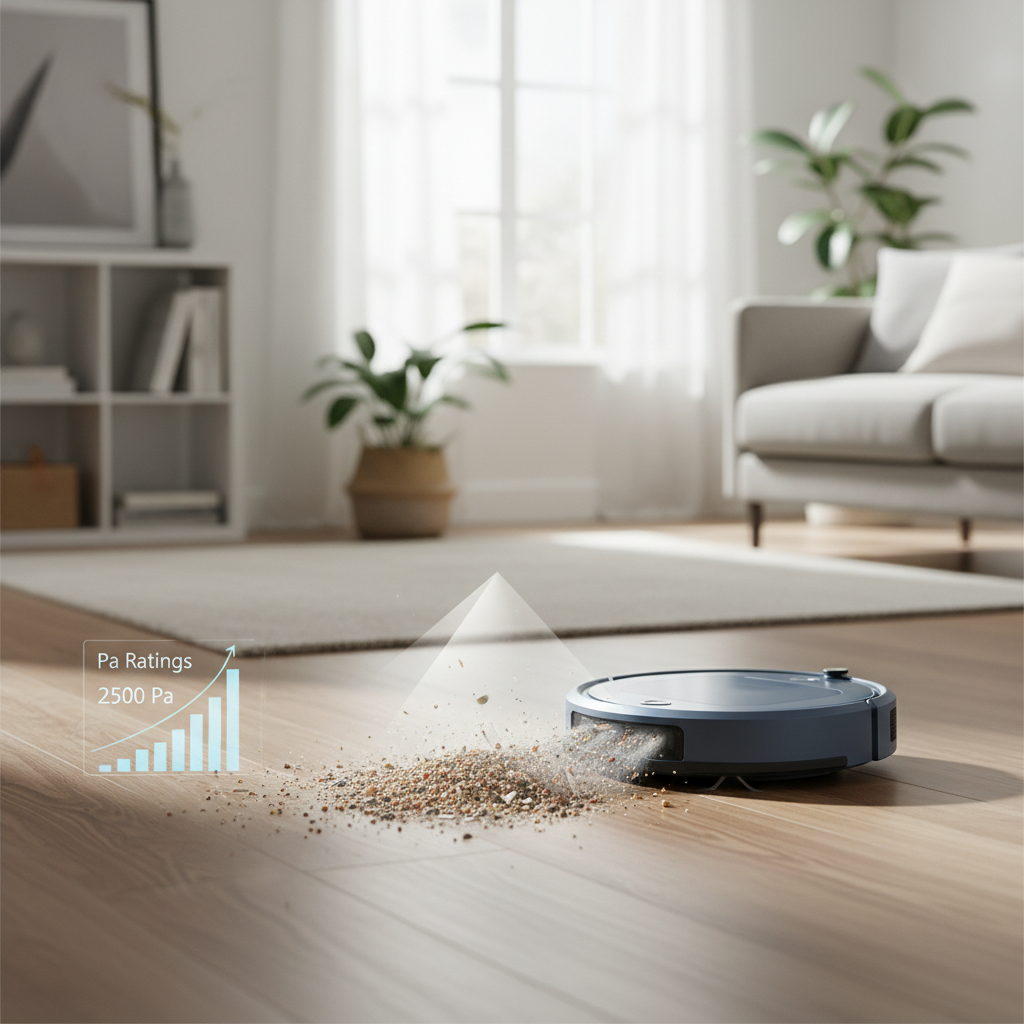
At its core, “Pa” stands for Pascal, a standard unit of pressure. In the context of robot vacuum cleaners, the Pa rating quantifies the static suction force the device can generate. Think of it as the raw pulling power: the higher the Pascal number, the greater the theoretical force the vacuum can exert to lift dust, dirt, and debris from your floors. Initially, it seems straightforward—more Pascals should logically equate to a cleaner home.
This metric helps manufacturers communicate a fundamental aspect of their vacuum’s engine strength. A robot vacuum with a higher Pa rating typically has the potential to tackle heavier debris, extract fine particles embedded in carpet fibers, and maintain effective cleaning across various floor types. However, this initial understanding is just the beginning of the story, as real-world performance is influenced by a much broader range of engineering considerations.
Beyond the Numbers: Why Pa Isn’t Everything
While it’s tempting to assume that a higher Pa rating automatically means a superior clean, this is a common misconception in the robot vacuum market. For years, manufacturers have engaged in an “arms race” of sorts, pushing Pa ratings to impressive heights—from 5,000 Pa being considered top-tier in 2022 to premium models now boasting 20,000 Pa or even 22,000 Pa. Yet, independent testing often reveals that this dramatic increase in raw suction power doesn’t always translate into a proportionate improvement in real-world cleaning efficiency.
The truth is, suction power is just one piece of a complex puzzle. A robot vacuum’s ability to clean effectively hinges on a harmonious interplay of several critical factors:
- Airflow Design: A vacuum isn’t just about pulling; it’s about moving air efficiently. An optimal airflow design ensures that debris, once lifted, is channeled effectively from the floor into the dustbin, minimizing resistance and maximizing pickup.
- Brush Roll Efficiency (Agitation): This is arguably one of the most critical components, especially for homes with carpets or pets. The brush roll physically agitates and loosens embedded dirt, pet hair, and crumbs, making it much easier for the vacuum to lift them. Without effective agitation, even sky-high suction power can struggle to dislodge stubborn debris.
- Sealing Performance: A tight seal between the vacuum’s cleaning head and the floor surface is essential. Any gaps can lead to suction loss, reducing the effective power applied to the dirt and diminishing cleaning results.
- Filtration System: A robust multi-stage filtration system, often including HEPA filters, is vital. It captures fine dust and allergens, preventing them from being recirculated into the air and also helps maintain consistent suction power by preventing clogs over time.
- Navigation and Smart Features: A powerful vacuum is useless if it doesn’t cover your entire home systematically. Advanced navigation systems, like Lidar mapping and AI obstacle avoidance, ensure comprehensive coverage and allow the robot to adapt suction levels based on floor type or perceived dirtiness.
“Many consumers focus solely on the Pascal rating, but a truly effective robot vacuum combines powerful suction with an intelligently designed brush system and efficient airflow. Neglecting these other elements is like buying a sports car with a huge engine but no transmission—it won’t get you where you need to go.” – Alexandre Dubois, Robotic Engineering Specialist
Independent tests have shown that a vacuum with a moderately high Pa rating and superior brush design might outperform a robot with a much higher Pa rating but a less effective brush system. This highlights that manufacturers’ stated Pa numbers should be viewed as a baseline specification, not the sole determinant of cleaning prowess.
Understanding Pa Ranges: What’s Right for Your Home?
While Pa isn’t the only factor, it’s still a useful guidepost. Different homes and cleaning needs will benefit from varying levels of suction power. Here’s a general breakdown of Pa ranges and what they typically mean for your cleaning routine:
- Basic Daily Cleaning (2,000 – 3,000 Pa):
- Ideal for: Hardwood, laminate, tile floors, and low-pile carpets with light daily dust and debris.
- Features: These models are excellent for routine maintenance, picking up surface-level dirt and pet dander. They are often more energy-efficient, leading to longer battery life on a single charge.
- Mixed Floors & Pet Hair (3,000 – 6,000 Pa):
- Ideal for: Homes with a mix of hard floors and medium-pile carpets, or households with pets that shed moderately.
- Features: Vacuums in this range offer a good balance of power and efficiency. They can handle most pet hair and common household dirt effectively, especially when coupled with well-designed brush rolls.
- Deep Carpet Cleaning & Heavy Debris (7,000+ Pa):
- Ideal for: Homes with extensive carpeting (especially high-pile), multiple shedding pets, or areas prone to heavy dirt and embedded grime.
- Features: These are the powerhouses, often featuring advanced brush systems and smart boost modes to increase suction on carpets. Many premium models now push past 10,000 Pa, with some reaching up to 22,000 Pa, like the Roborock Saros 10 or Dreame X50 Ultra. While raw Pa is high, remember to also consider the brush design for optimal deep cleaning.
It’s important to note that very high suction power (e.g., above 10,000 Pa) might come with trade-offs, such as increased noise levels and reduced battery life, particularly when operating at maximum settings. Some advanced robots are designed to intelligently adjust suction based on the floor type, preserving battery on hard floors and boosting it on carpets.
Pa vs. Other Metrics: Air Watts and Beyond
While Pascals are the most common unit for robot vacuums, you might encounter other metrics for different vacuum types. For instance, Air Watts (AW) is often used for cordless stick vacuums. Air Watts provide a more comprehensive measure of suction, as they combine airflow (how much air moves through the system) with vacuum pressure (the force pulling debris). Some experts consider AW a more accurate indicator of real-world cleaning power because it accounts for the actual movement of air through the device, which is crucial for picking up dirt.
However, even Air Watts are not universally standardized across all vacuum manufacturers, and there’s no direct conversion or correlation between Pa and AW ratings. This lack of a consistent, industry-wide standard means that comparing vacuums purely by numbers across different brands or even different product lines can be challenging. This further underscores the importance of looking beyond a single number and considering the overall design and performance claims, ideally backed by independent reviews.
Choosing the Right Suction Power for Your Robot Vacuum
Selecting the ideal robot vacuum means looking beyond the dazzling Pa numbers and adopting a holistic approach. Here’s how to make an informed decision:
- Assess Your Home’s Needs:
- Floor Types: Do you have mostly hard floors, low-pile carpets, or thick area rugs? Hard floors generally require less suction than deep-pile carpets.
- Pets & Allergies: Homes with shedding pets or allergy sufferers benefit from higher suction power to pick up pet hair and fine allergens, alongside excellent filtration.
- Debris Type: Are you mainly dealing with light dust, or do you have frequent spills of crumbs, cat litter, or larger debris?
- Focus on the Entire Cleaning System: Prioritize models that integrate powerful suction with effective brush rolls, intelligent navigation, and efficient airflow design. These elements work synergistically to deliver a superior clean.
- Don’t Chase the Highest Pa Blindly: Remember that diminishing returns can occur. A robot vacuum with 8,000 Pa and an excellent brush system might clean more effectively on your carpets than one with 18,000 Pa and a poorly designed agitation system.
- Consider Trade-offs: Higher suction often means more noise and a shorter battery life at maximum settings. Look for models with adaptive suction modes that automatically adjust power based on the surface, offering a balance between performance and battery endurance.
- Read Independent Reviews: Real-world testing by experts, like those found on reputable tech review sites, provides invaluable insights that no single specification can offer. They can help you understand how a vacuum performs on different surfaces with various types of debris.
- Factor in Maintenance: A vacuum’s suction power can degrade over time if not properly maintained. Regular cleaning of brushes, emptying the dustbin, and replacing filters are crucial for sustained performance.
To help you visualize, here’s a comparison of suction power ranges by typical use cases:
Robot Vacuum Suction Power by Use Case
|
Our Picks for the Best Robot vacuum cleaner in 2026
As an Amazon Associate I earn from qualifying purchases.
|
||
| Num | Product | Action |
|---|---|---|
| 1 | Shark Matrix Clean | Robot Vacuum Cleaner with Powerful Suction for Pet Hair, Rugs, Carpets & Hard Floors | Self-Empty Base | 60-Day Capacity | Voice Control | LiDAR Navigation | Cool Grey | AV2511AE |

|
| 2 | ILIFE V2 Robot Vacuum Cleaner, Tangle-Free Suction, 120 Mins Runtime, Slim, Self-Charging Robotic Vacuum Cleaner, Ideal for Pet Hair and Hard Floors |
|
| 3 | SHELIKI Robot Vacuum and Mop Combo, 3-in-1 Robotic Vacuums Cleaner with 70-Day Self-Emptying Base, LiDAR Navigation Smart Mapping & Strong 6000Pa Suction, for Pet Hair, Hard Floor, Carpet |
|
| 4 | Tikom Robot Vacuum and Mop Combo, 5000Pa Robotic Vacuum Cleaner, 150 Min Max, App & Remote Control, Ideal for Hard Floor, Carpet, Pet Hair, Self-Charge(G8000 Max) |
|
| 5 | roborock Q7 M5+ Robot Vacuum and Mop, Upgraded from Q5 Max+, Up to 7-9 Weeks Self-Empty, 10000Pa Suction, Dual Anti-Tangle System for Pet Hair & Carpet, PreciSense LiDAR Navigation, App Control, Black |
|
| 6 | eufy Robot Vacuum 11S MAX, Super Thin, Powerful Suction, Quiet, Self-Charging Robotic Vacuum Cleaner, Cleans Hard Floors to Medium-Pile Carpets, Black |
|
| 7 | Robot Vacuum and Mop Combo, 2 in 1 Robot Vacuum Cleaner with WiFi/App, Smart Robotic Vacuums with Strong Suction, Schedule, Self-Charging, Slim, Quiet, Ideal for Hard Floor, Pet Hair, Low Pile Carpet |
|
| 8 | roborock Qrevo Series Robot Vacuum and Mop, 8000Pa Suction, Upgraded from Qrevo S, Anti-Tangle Brushes, Smart Obstacle Avoidance, Auto Mop Washing, All-in-One Dock, 200RPM Spinning Mops, Black(QV 35A) |
|
| 9 | Tikom Robot Vacuum and Mop, 6000Pa Robotic Vacuum Cleaner with Self-Emptying Base, 90 Days Capacity, LiDAR Navigation, Home Mapping, Ideal for Pet Hair, Hard Floors, Carpet (L8000 Plus) |
|
| 10 | Robot Vacuum and Mop, Mapping Robotic Vacuums Cleaner with LiDAR Navigation Smart & Strong Suction, WiFi/App/Alexa/Voice Control, Obstacle Avoidance, for Home, Wood/Hard Floors, Pet Hair -Gray |
|
| Use Case / Floor Type | Recommended Pa Range | Key Considerations |
|---|---|---|
| Light Daily Cleaning (Hardwood/Tile) | 2,000 – 3,000 Pa | Energy efficiency, quiet operation, surface-level dust |
| Mixed Floors & Moderate Pet Hair | 3,000 – 6,000 Pa | Good brush agitation, adaptive suction, general debris |
| Deep Carpet Cleaning & Heavy Debris | 7,000+ Pa | Powerful brush rolls, smart carpet boost, fine particle extraction |
Conclusion
The Pascal (Pa) rating is a key metric for understanding a robot vacuum’s raw suction potential, but it is far from the only factor determining its cleaning prowess. While higher Pa numbers can indicate stronger suction, true cleaning efficiency results from a harmonious blend of airflow design, brush roll effectiveness, sealing, and smart navigation. By considering your specific cleaning needs and looking at the robot vacuum as an integrated cleaning system rather than just a single specification, you can confidently choose a device that truly delivers a spotless and hassle-free home.
What aspects of robot vacuum technology do you find most confusing, and what factors guide your purchasing decisions?
Frequently Asked Questions
Is a higher Pa rating always better for a robot vacuum?
Not necessarily. While a higher Pa rating indicates stronger theoretical suction, real-world cleaning performance is also heavily influenced by factors like brush roll design, airflow efficiency, and proper sealing. A robot with a moderate Pa rating but excellent overall design can often outperform one with a significantly higher Pa that lacks in other areas.
What Pa rating is good for pet hair?
For homes with pets, a robot vacuum with at least 3,000-5,000 Pa is generally recommended for effectively picking up pet hair from mixed floor types. If you have thick carpets or multiple heavy-shedding pets, looking for models in the 6,000-8,000+ Pa range, combined with strong brush agitation, will provide more thorough cleaning.
How often should I clean my robot vacuum’s filter to maintain suction?
To maintain optimal suction power, it’s crucial to clean your robot vacuum’s filter regularly, typically after every 1-3 uses, depending on how much debris it collects and if you have pets. Most manufacturers recommend replacing filters every 2-3 months to ensure peak performance and prevent a decrease in suction.
Can too much suction power damage my floors?
For most modern robot vacuums, high suction power is generally not damaging to floors, especially hard floors. However, on delicate surfaces or very lightweight rugs, extremely high suction combined with aggressive brush rolls could potentially scatter debris or cause rugs to get tangled. Many advanced robot vacuums feature adjustable suction settings, allowing you to choose a lower power mode for sensitive surfaces.