Maintaining a pristine environment in gyms and yoga studios is paramount, not just for aesthetics but for hygiene and client satisfaction. Imagine a silent, tireless cleaner working behind the scenes, ensuring floors are spotless, free of dust, sweat, and debris. This is where the right robot vacuum cleaner steps in, transforming tedious cleaning routines into an automated, efficient process. But with so many options available, how do you choose a robot vacuum robust enough for the unique demands of a fitness facility or serene yoga space? This comprehensive guide will help you navigate the landscape of commercial-grade robot vacuums, identifying the features and models that deliver optimal performance for your specific needs.
What is a Robot Vacuum Cleaner?
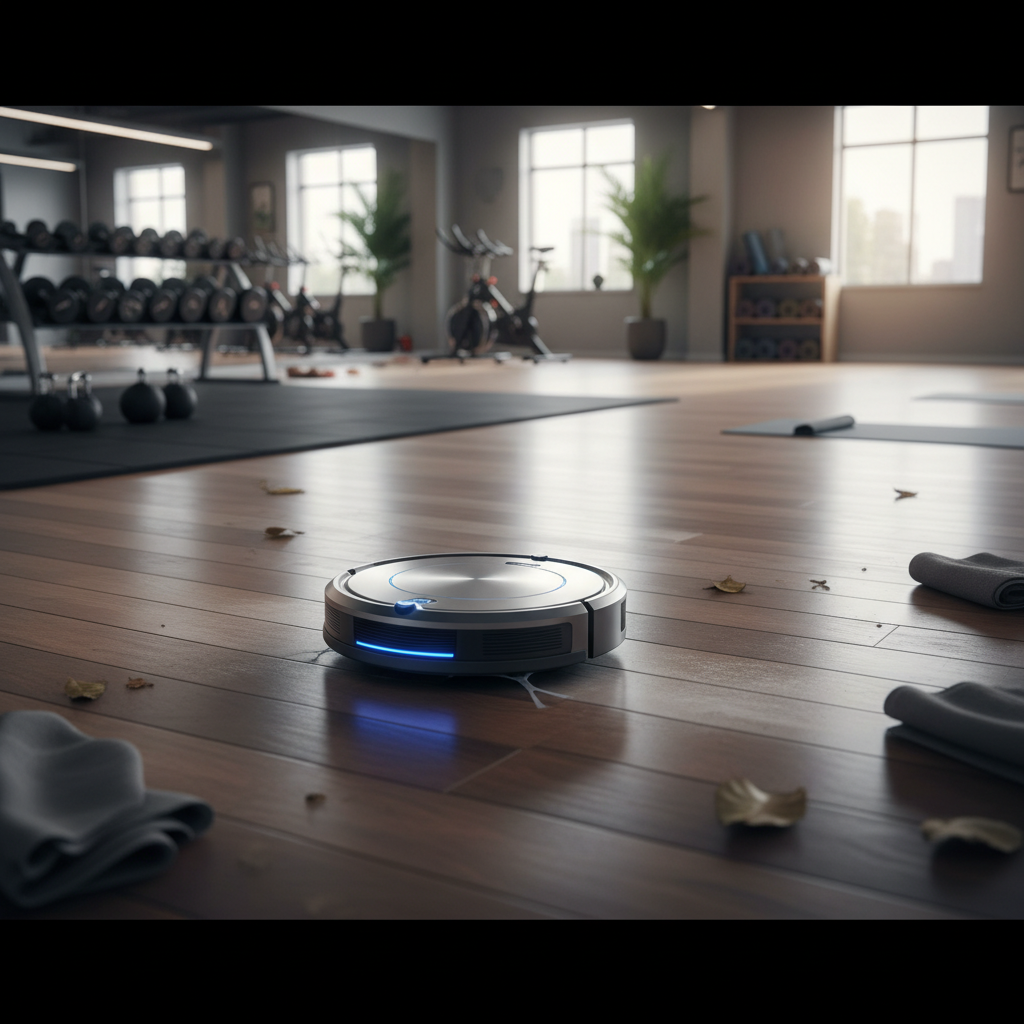
A robot vacuum cleaner is an autonomous device designed to clean floors with minimal human intervention. Unlike their residential counterparts, commercial robot vacuums are engineered for heavy-duty, frequent use in expansive, high-traffic environments like gyms and yoga studios. These advanced machines are built with enhanced durability, powerful suction capabilities, extended battery life, and larger dustbins, distinguishing them from standard household models. They leverage sophisticated navigation systems to ensure thorough and consistent cleaning across diverse surfaces and complex layouts.
The evolution of robot vacuums has seen significant advancements since early models, incorporating features like smart mapping, obstacle avoidance, and integrated mopping. For commercial settings, these innovations translate into substantial time and labor savings, allowing staff to focus on other critical tasks while the robot ensures impeccable floor hygiene.
Benefits of Using Robot Vacuum Cleaners in Gyms and Yoga Studios
Integrating robot vacuum cleaners into your cleaning regimen offers a multitude of advantages tailored to the dynamic environment of gyms and yoga studios. These benefits extend beyond simple cleanliness, impacting operational efficiency, client experience, and staff productivity.
- Time and Labor Savings: Robot vacuums automate routine floor cleaning, significantly reducing the manual effort required from your staff. This frees up valuable time for employees to focus on more specialized cleaning tasks, client interaction, or equipment maintenance.
- Consistent and Thorough Cleaning: Equipped with advanced sensors and mapping technology, robot vacuums provide a consistent level of cleanliness that manual cleaning might miss due to human error or time constraints. They ensure every corner and open space is regularly attended to.
- Adaptability to Various Floor Types: From hardwood and tile in changing rooms and common areas to specialized rubber flooring and yoga mats, commercial robot vacuums are designed to handle diverse surfaces. Many can seamlessly transition between these types, picking up everything from fine dust to heavier debris.
- Improved Air Quality: High-traffic areas like gyms can accumulate significant dust and allergens. Many commercial robot vacuums feature advanced filtration systems, including HEPA filters, which capture fine particles and improve indoor air quality, creating a healthier environment for both clients and staff.
- Quiet Operation: Especially crucial for yoga studios or early morning gym hours, many commercial models operate at a low noise level, minimizing disruption to classes or client workouts. For instance, some commercial units boast noise levels as low as 62 dB.
“Automating floor cleaning with robot vacuums allows businesses to maintain a consistently high standard of hygiene without draining valuable staff resources. It’s a game-changer for high-traffic commercial environments.” – Admin, ReviewEvoli, Robot Vacuum Expert
Essential Features to Consider for Gyms and Yoga Studios
Choosing the ideal robot vacuum for your gym or yoga studio requires careful consideration of features that directly address the unique demands of these environments. Prioritizing these specifications will ensure your investment delivers maximum cleaning efficiency and longevity.
- Floor Type Versatility: Gyms and yoga studios typically feature a mix of surfaces, including hard floors (wood, tile, concrete), rubber mats, and sometimes low-pile carpets. Your robot vacuum should seamlessly transition between these and offer optimized cleaning modes for each. Look for powerful brush rolls and adjustable suction settings.
- Cleaning Area and Battery Life: Fitness facilities often encompass large, open spaces. A robot vacuum needs a long-lasting battery (typically 2-8 hours) to cover the entire area in a single cleaning cycle. Look for models that can clean thousands of square feet per hour, like the WHIZ commercial robot vacuum which can cover 5,000-6,000 square feet per hour. Fast charging capabilities are also beneficial for quick turnarounds.
- Navigation and Obstacle Avoidance: With exercise equipment, free weights, yoga props, and locker room benches, advanced navigation is critical. LiDAR (Light Detection and Ranging) sensors and SLAM (Simultaneous Localization and Mapping) technology enable efficient mapping, precise movement, and effective obstacle detection and avoidance. The “anti-lost” function ensures the robot stays within designated areas, preventing it from getting stuck on equipment.
- Suction Power: A robust motor delivering high suction power (e.g., 3000Pa and above) is essential to effectively pick up dust, dirt, sweat residue, hair, and even small debris common in fitness environments. This ensures deep cleaning and prevents accumulation over time.
- Dustbin Capacity: High-traffic commercial spaces generate more debris than residential homes. A large dustbin capacity (1 liter or more) is crucial to minimize the frequency of manual emptying, thus reducing staff involvement. Self-emptying base stations further enhance autonomy by allowing the robot to automatically transfer collected debris to a larger bin for weeks of hands-off operation.
- Filtration System: To maintain excellent indoor air quality, especially important for clients breathing heavily during workouts, look for models equipped with HEPA filters. These filters trap fine dust particles, allergens, and pet dander, ensuring cleaner air circulating throughout your facility.
- Connectivity and Smart Features: App control allows you to schedule cleaning times, set virtual boundaries for specific zones, monitor cleaning progress, and even receive maintenance alerts. Integration with facility management systems or voice assistants can add further convenience and operational oversight.
- Noise Level: While powerful, a commercial robot vacuum for a gym or yoga studio should ideally operate quietly (below 60-65 dB) to avoid disturbing clients or classes. This is a significant consideration for maintaining a peaceful environment.
- Durability and Maintenance: Commercial-grade robots are built with more robust materials to withstand continuous daily operation. Consider the ease of maintenance, such as brush cleaning, filter replacement, and access to the dustbin, to ensure long-term performance.
Comparing Robot Vacuum Cleaner Price Segments for Commercial Use
When investing in a robot vacuum for a commercial space like a gym or yoga studio, the price segment often correlates with performance, features, and durability. Understanding these distinctions helps align your budget with your facility’s specific cleaning demands.
- Entry-Level Commercial (Under $1,000): This segment typically offers more robust versions of high-end residential robots, providing good suction and improved battery life compared to basic home models. They might handle moderate-sized areas and simpler layouts effectively. However, they may lack some advanced navigation features, extremely large dustbins, or the same level of heavy-duty construction found in higher-tier commercial units. These could be suitable for smaller studios or specific zones within a larger gym.
- Mid-Range Commercial ($1,000 – $3,000): Vacuums in this category offer a significant upgrade in terms of endurance, cleaning power, and navigation. You’ll find features like advanced LiDAR mapping, longer battery runtimes (e.g., 3-5 hours), larger dustbins, and more durable components. Some models may include basic self-emptying docks. These are well-suited for medium to large gyms and yoga studios with varied floor types and more complex cleaning schedules.
- High-End Commercial (Above $3,000): This top-tier segment features purpose-built commercial robotic vacuums designed for maximum autonomy, coverage, and minimal oversight. They boast extended battery life (up to 8 hours), massive dustbin capacities, highly sophisticated AI-powered navigation (sometimes without pre-mapping), and self-cleaning/self-emptying docking stations that can last for weeks. Many include advanced obstacle avoidance for cluttered environments and often integrate with professional facility management systems. These are ideal for large fitness centers, multi-floor studios, or operations aiming for the highest level of cleaning automation. The Rosie 2.0, for example, is positioned as an AI-powered commercial vacuum revolutionizing housekeeping, capable of servicing up to 36,000 square feet per day.
Top Robot Vacuum Cleaners for Gyms and Yoga Studios
While many residential robot vacuums boast impressive features, commercial environments require specialized capabilities. Here are examples of models or types known for features crucial to gyms and yoga studios, often falling into the commercial or high-end residential categories.
- Rosie 2.0 Commercial Robot Vacuum: Designed specifically for commercial settings, Rosie 2.0 by Tailos emphasizes autonomy and efficiency. It boasts a cleaning capacity of up to 15,000 square feet per eight-hour shift per robot, operates at a quiet 62 dB, and uses advanced SLAM technology without needing pre-mapping. Its 1.7 L dust bag capacity is designed for up to a week of use, making it ideal for large spaces with continuous cleaning needs.
- VIGGO Commercial Robotic Vacuums: VIGGO models are highlighted for their state-of-the-art navigation (LiDAR and SLAM), high-capacity dustbins, and prolonged battery life, making them suitable for expansive commercial areas. They feature powerful suction and intelligent sensors for high-traffic zones and adapt seamlessly to different floor surfaces, from carpeted offices to hard-floored retail areas.
- Makita LXT Robotic Vacuum: This model targets commercial floor applications, offering a three-stage cleaning system with side brushes, a main brush, and vacuum suction. It features a large dust box and can provide up to 3.5 hours of continuous operation, covering up to 5,380 square feet. Its cruise mode and boundary line function help manage cleaning in large, obstacle-rich environments.
- Karcher KIRA CV 60/1 Autonomous Robotic Vacuum: Positioned as a truly autonomous vacuum, the KIRA CV 60/1 uses cutting-edge AI and extensive floor care expertise. The KIRA CV 50 Bp, another Karcher model, is a smart, self-navigating solution with LiDAR and multi-sensor technology, a 36V exchangeable battery for precise cleaning of carpets and hard floors, and quiet operation, making it ideal for commercial spaces like offices and hospitals.
- High-End Consumer Models with Commercial Potential (e.g., Roborock Qrevo Master, Dreame L40S Ultra): While not strictly “commercial,” some premium residential models offer features that can be highly beneficial for smaller studios or specific zones within larger facilities. The Roborock Qrevo Master is lauded for its excellent obstacle avoidance and superior cleaning performance on carpets, making it suitable for areas with mats or carpeted zones. These models often feature strong suction, self-emptying docks, and advanced mopping capabilities, which are useful for sweat and spills.
Detailed Comparison Table (Illustrative)
|
Our Picks for the Best Robot vacuum cleaner in 2026
As an Amazon Associate I earn from qualifying purchases.
|
||
| Num | Product | Action |
|---|---|---|
| 1 | Tikom Robot Vacuum and Mop, 6000Pa Robotic Vacuum Cleaner with Self-Emptying Base, 90 Days Capacity, LiDAR Navigation, Home Mapping, Ideal for Pet Hair, Hard Floors, Carpet (L8000 Plus) |

|
| 2 | Robot Vacuum and Mop Combo, 2 in 1 Robot Vacuum Cleaner with WiFi/App, Smart Robotic Vacuums with Strong Suction, Schedule, Self-Charging, Slim, Quiet, Ideal for Hard Floor, Pet Hair, Low Pile Carpet |
|
| 3 | Robot Vacuum and Mop, Mapping Robotic Vacuums Cleaner with LiDAR Navigation Smart & Strong Suction, WiFi/App/Alexa/Voice Control, Obstacle Avoidance, for Home, Wood/Hard Floors, Pet Hair -Gray |
|
| 4 | eufy Robot Vacuum 11S MAX, Super Thin, Powerful Suction, Quiet, Self-Charging Robotic Vacuum Cleaner, Cleans Hard Floors to Medium-Pile Carpets, Black |
|
| 5 | Tikom Robot Vacuum and Mop Combo, 5000Pa Robotic Vacuum Cleaner, 150 Min Max, App & Remote Control, Ideal for Hard Floor, Carpet, Pet Hair, Self-Charge(G8000 Max) |
|
| 6 | SHELIKI Robot Vacuum and Mop Combo, 3-in-1 Robotic Vacuums Cleaner with 70-Day Self-Emptying Base, LiDAR Navigation Smart Mapping & Strong 6000Pa Suction, for Pet Hair, Hard Floor, Carpet |
|
| 7 | ILIFE V2 Robot Vacuum Cleaner, Tangle-Free Suction, 120 Mins Runtime, Slim, Self-Charging Robotic Vacuum Cleaner, Ideal for Pet Hair and Hard Floors |
|
| 8 | Shark Matrix Clean | Robot Vacuum Cleaner with Powerful Suction for Pet Hair, Rugs, Carpets & Hard Floors | Self-Empty Base | 60-Day Capacity | Voice Control | LiDAR Navigation | Cool Grey | AV2511AE |
|
| 9 | roborock Qrevo Series Robot Vacuum and Mop, 8000Pa Suction, Upgraded from Qrevo S, Anti-Tangle Brushes, Smart Obstacle Avoidance, Auto Mop Washing, All-in-One Dock, 200RPM Spinning Mops, Black(QV 35A) |
|
| 10 | roborock Q7 M5+ Robot Vacuum and Mop, Upgraded from Q5 Max+, Up to 7-9 Weeks Self-Empty, 10000Pa Suction, Dual Anti-Tangle System for Pet Hair & Carpet, PreciSense LiDAR Navigation, App Control, Black |
|
| Criteria | Rosie 2.0 (Commercial) | VIGGO (Commercial) | Makita LXT (Commercial) | High-End Consumer (e.g., Roborock Qrevo Master) |
|---|---|---|---|---|
| Price Segment | High-End Commercial | Mid to High-End Commercial | Mid-Range Commercial | Entry-Level Commercial (or High-End Residential) |
| Cleaning Area | Up to 15,000 sq ft/8 hr shift | Expansive commercial areas | Up to 5,380 sq ft | Varies, large residential/small commercial |
| Battery Life | 90-180 min (Boost-Eco) | Prolonged, extended runtime | Up to 3.5 hours | ~3-4 hours |
| Navigation | SLAM (no pre-mapping) | LiDAR, SLAM | Robotic guidance, Cruise Mode | LiDAR, advanced AI mapping |
| Dustbin | 1.7 L (up to a week use) | High-capacity | Large dust box | Large, often with self-emptying dock |
| Suction Power | ~88 CFM | Powerful mechanism | Strong, three-stage system | Very high (e.g., 5000Pa+) |
| Filtration | Not specified (assumed) | Not specified (assumed) | Not specified (assumed) | HEPA-level or multi-layer |
| Special Features | AI-powered, 62 dB noise, white glove support | Fast charging, anti-lost function | Boundary line mode, find beacon | Excellent obstacle avoidance, auto-mop wash/dry |
| Pros | Highly autonomous, quiet, large capacity, dedicated support | Versatile on surfaces, user-friendly interface | Cordless freedom, robust cleaning stages | Superior obstacle avoidance, excellent deep cleaning |
| Cons | Higher cost, subscription model | May require professional setup | Limited obstacle avoidance compared to AI models | Not designed for continuous multi-shift commercial use |
How to Select the Best Robot Vacuum Cleaner
Choosing the ideal robot vacuum for your gym or yoga studio involves a systematic approach to ensure it meets your facility’s unique demands. Follow these steps to make an informed decision:
-
Assess Your Facility’s Needs:
- Floor Types: List all surfaces (hardwood, tile, rubber mats, low-pile carpet).
- Total Area: Measure the square footage that needs cleaning.
- Layout Complexity: Note the number of obstacles (equipment, benches), tight spaces, and rooms.
- Cleaning Frequency: Determine how often and when cleaning is needed (e.g., daily, multiple times a day, during off-hours).
- Type of Debris: Consider typical messes (dust, hair, sweat, small debris from shoes).
- Budget: Establish a realistic budget range for your investment.
-
Prioritize Key Features: Based on your assessment, rank the importance of features like battery life, suction power, dustbin capacity (or self-emptying), navigation technology, quiet operation, and multi-surface capability. For instance, a yoga studio might prioritize quiet operation and excellent obstacle avoidance for props, while a busy gym needs maximum suction and large area coverage.
-
Research and Compare Models: Look for commercial-grade robot vacuums that match your prioritized features. Read expert reviews, compare specifications, and consider models specifically designed for large, high-traffic environments. Pay attention to user feedback from businesses with similar cleaning challenges.
-
Consider Trial Periods or Demos: If possible, explore options for a trial period or a virtual demonstration. Seeing the robot vacuum operate in a similar commercial setting can provide invaluable insight into its real-world performance.
-
Evaluate Support and Maintenance: Commercial equipment often requires robust support. Look for manufacturers or providers who offer comprehensive warranties, reliable customer service, and readily available parts and maintenance assistance. This ensures long-term operational efficiency and minimizes downtime.
-
Purchase from Reputable Sources: Buy from authorized dealers or well-known commercial cleaning equipment suppliers. This ensures you receive a genuine product, proper warranty coverage, and access to customer support.
Conclusion
The pursuit of a consistently clean and hygienic environment in gyms and yoga studios is no longer a labor-intensive chore. With the advent of sophisticated robot vacuum cleaners, facility managers can achieve pristine floors with remarkable efficiency and autonomy. By understanding the critical distinctions between commercial and residential models and meticulously evaluating features such as powerful suction, extended battery life, advanced navigation, and large dustbin capacities, you can select a cleaning solution that not only meets but exceeds your expectations. Investing in the right robot vacuum cleaner is an investment in operational efficiency, a healthier environment, and ultimately, a superior experience for your clients.
Are you ready to transform your cleaning regimen and enhance your facility’s appeal? The perfect robotic cleaning partner awaits to silently work its magic.
Frequently Asked Questions
What makes a robot vacuum cleaner suitable for a commercial gym or yoga studio?
Commercial-grade robot vacuums are designed for extended, heavy-duty use in large, high-traffic areas. They typically feature higher suction power (over 3000Pa), longer battery life (2-8 hours), larger dustbins, advanced LiDAR or SLAM navigation, and more durable components compared to household models.
Can a regular household robot vacuum cleaner handle the demands of a commercial space?
Generally, no. While some high-end residential models have strong features, they are not built for the continuous operation, large area coverage, or heavy debris volume of a commercial gym or yoga studio. They would likely require frequent emptying, recharging, and may wear out faster.
How important is quiet operation for a yoga studio?
Extremely important. Yoga studios thrive on a peaceful atmosphere, so a robot vacuum with a low noise level (ideally below 65 dB) is crucial. Some commercial models are specifically designed for quiet operation to avoid disturbing classes or client relaxation.
Do commercial robot vacuums work on specialized gym mats and rubber flooring?
Yes, many commercial robot vacuums are designed for versatility across various floor types, including hard floors, low-pile carpets, and specialized rubber flooring often found in gyms. Look for models with powerful brush rolls and adaptable cleaning modes for optimal performance on these surfaces.
Can robot vacuums completely replace human cleaning staff in a fitness facility?
Not entirely. Robot vacuums excel at routine floor cleaning, significantly reducing manual workload and labor costs. However, they cannot handle tasks like deep sanitation of restrooms, equipment wiping, trash removal, or cleaning complex vertical surfaces. They are best utilized as part of a hybrid cleaning solution, enhancing overall efficiency.